Posts

The Roman finger-ring from Graig
Image
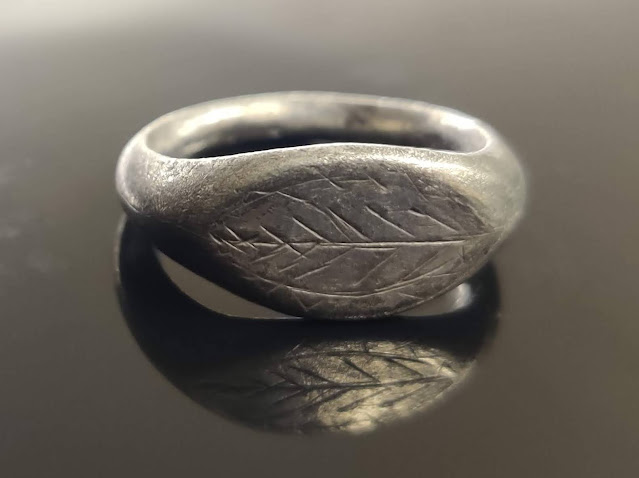
    Roman finger-ring from Graig Newport Museum and Art Gallery has finally received the Roman finger-ring from Graig. This was  purchased for the museum by  the Friends of Newport Museum and Art Gallery. This finger-ring was discovered by a metal-detectorist in Graig, Newport. It features a palm branch design, which was widely believed to symbolise victory in the Roman period - in particular, victory over the ‘Evil Eye’. Such rings would have functioned as amulets, protecting the wearer from harm. The ring was declared Treasure due to its age and precious metal content. It was purchased by the Friends of Newport Museum and Art Gallery for Newport Museum, where it will be displayed in the near future.  see The Treasure Act Code of Practice (2nd Revision) In England, Wales and Northern Ireland, all finders of gold and silver objects, and groups of coins from the same finds, over 300 years old, have a legal obligation to report such items under the Treasu...
Newport Rugby and Rodney Parade

Image
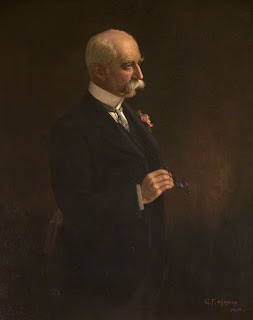
  Newport Rugby and Rodney Parade 1. Rodney Parade Viscount Tredegar painted by George Frederick Harris (1910) Newport Museum and Art Gallery From the Marshes to the Salt Pool. In 1875, the Newport Athletic Club was created, and two years later they secured the use of land at Rodney Parade from Godrey Morgan 1st Vicount Tredegar , for their cricket, tennis, rugby and athletics teams. He called it Rodney Parade after his brother Charles Rodney Morgan   (2 December 1828 – 14 January 1854). Charles Rodney  Morgan was the first born son and was due to inherit the estate but died in  1854, in Marseilles. For more information click here -   Charles Rodney Morgan   For more information about Viscount Tredegar - Godfrey Morgan, click here for Steffan Ellis's blog post.  Tag Archives: Godfrey Morgan . Clarke's Garden 1854 Newport Rugby Club can trace its origins to Newport Victoria Cricket Club, which played on the marshes in what is now an area stretching...

The Development of Newport Docks

Image
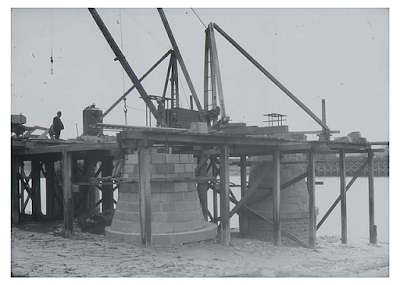
  The Development of  Newport Docks  Newport Museum and Art Gallery, closed at the moment, had a photographic exhibition about the development of Newport Docks.  The Newport Transporter Bridge under construction, 7 June 1903 The Newport Ship Newport's riverside wharves and jetties have existed at this major trading port since at least the fifteenth century, as evidenced by the discovery of The Newport Ship trading vessel dating from 1465-6. See David Jordan's painting below. Approaching Newport” by David Jordan  The Monmouthshire Canal The town's industrial significance was established in 1799 with the opening of the Monmouthshire Canal (nprn 85125). Subsequent development made Newport docks the the outlet for all iron and coal production of the Monmouthshire Valleys of Rhymney, Ebbw, Sirhowy and Afon Llwyd.  The Monmouthshire Canal Company with its canal and tramroads was responsible for the growth of Newport, which became the third largest coal port in Br...

John Frost's Return to Newport by Ray Stroud.

Image
  John Frost’s Return to Newport On Monday 11 August 1856, John Frost returned to Newport for the first time in 17 years.    He arrived from Bristol at about 3 pm that afternoon on a steam packet named the  Swift . John Frost in his later years   A large crowd, estimated to be in the hundreds, waited for his arrival at the packet slip.    Gathering on the town bridge and the banks of the River Usk, they  soon recognised him.    As the vessel came closer to the river bank, shouts of welcome were raised, and Frost and his friends on board the steamer responded.   A steam packet arriving in Newport This was the last leg of a long journey back to his homeland.    Having been exiled in Tasmania for his part in the Newport Rising of 1839, he had eventually received a pardon in 1854.    This was largely due to the efforts of the radical MP, Thomas  Duncombe, who had persuaded the Prime Minister, Lord Aberdeen, to g...