Posts

Richard Frame and John Frost's Grave Stone
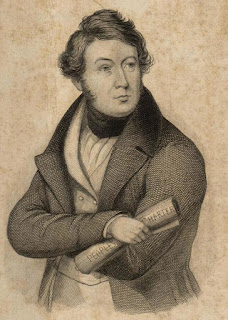
Image
  Richard Frame and  John Frost's Grave Stone  On Richard Frame's regular trips to Newport Museum and Art gallery he would always pause at the cabinet that housed the Chartist Collection. It  included a photograph of John Frost’s house in Stapleton, near Bristol, where he went to live with his wife and daughter when he was finally allowed to return to Britain in 1856. John Frost was  born on 25th May 25 1784,  in  Newport , Monmouthshire, and died on  27  July 1877, near   Bristol .  He was a hero of  Chartism  which was  the first mass political reform movement and was leader of the Newport rising of November 4, 1839, in which about 20 Chartists were killed by troops.  He was a prosperous draper and tailor in Newport and served as a member of Newport’s first elected town council from 1835, and as a magistrate from 1836–39 and mayor from 1836–37. He was a   delegate   from Monmouthshire to the Chartist ...

Musket Balls and Misconceptions

Image
Musket balls and misconceptions by Ray Stroud Artist unknown ©  Newport Museum and Art Gallery         Many youngsters through the years have found it difficult to resist the temptation of squeezing their fingers into the holes in the pillars of the Westgate Hotel.   We had all, probably, been regaled with stories of the Chartist attack on the Westgate, and of the musket balls that had penetrated the building during the battle.   But were these tales based on truth or myth?   In recent years, many in Newport have adopted the ‘myth’ position, arguing that they had been drilled into the pillars at a later date, possibly to attach gates or some other structure.   But does that theory line up with the historical evidence? The holes found in the pillars as they look today.  © Ray Stroud         The portico, which today sadly stands concealed behind sheets of chipboard, is the only remaining feature of a...

A Legacy from Newport's Victorian Era

Image
A Legacy from Newport’s Victorian Era by Mary Evans Copyright Newport Museum and Art Gallery, Percy Scannel's archive,  Ref. 1906, 96.469.1. Postcard dated 1906.  For more postcards  click here Access to green spaces became a valued part of our lives during lockdown and public parks played a major role in many areas. As I have been walking through Belle Vue Park and Tredegar House Parkland over the past few months it has struck me how their reopening during lockdown was carrying on the tradition of the public park movement of the late 19th Century. Newport reopened its parks on the 18 May this year when initially visitors were limited to a 5 mile radius. The oldest of its parks, Belle Vue, is a legacy of the public park movement which was such a success in the later part of the 19th Century and  depended on funding from town and city corporations across Britain. In the early part of the Victorian era access to public open green sp...